

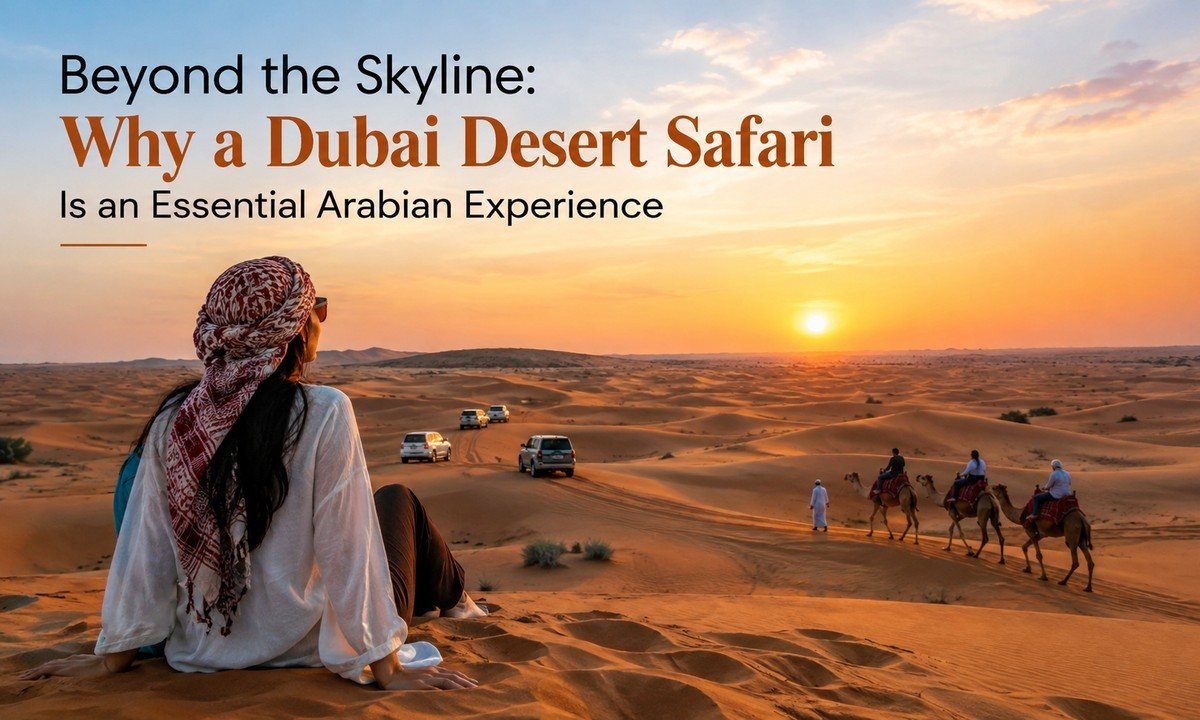
Beyond the Skyline: Why a Dubai Desert Safari Is an Essential Arabian Experience
Dubai is often introduced through its skyline: towering architecture, polished avenues, luxury hotels and a cityscape that seems to change almost every year. Yet beyond the glass and steel lies a very different side of the emirate. A short drive from the city leads into an expansive landscape of dunes, open skies and quiet stretches of sand where the pace of Dubai changes completely.
A Dubai desert safari offers a chance to experience that landscape first hand. What began as a simple excursion into the desert has developed into one of the emirate's best-known visitor experiences, combining outdoor adventure with elements of traditional Arabian hospitality and desert culture.
From Modern Dubai to the Open Desert
The contrast is part of the attraction.
Within a relatively short journey from central Dubai, visitors can leave behind busy roads and high-rise buildings and find themselves surrounded by rolling dunes. Depending on the safari chosen, the experience can take place in the morning, afternoon or around sunset.
Morning safaris tend to focus on the landscape and outdoor activities. Evening programmes often add a sunset stop, a traditional-style camp, dinner and cultural entertainment, creating a longer experience that stretches from afternoon into the night.
For first-time visitors, this change of scenery can be one of the most memorable parts of the trip. The desert doesn't compete with Dubai's architecture; it provides an entirely different perspective on the emirate.
The Thrill of the Dunes
For many visitors, the adventure begins with a 4x4 drive across the dunes.
Known popularly as dune bashing, the activity takes place in specially equipped four-wheel-drive vehicles and follows established safari routes. The movement across the changing contours of the sand creates a distinctly different driving experience from travelling on Dubai's highways.
Safaris may also include sandboarding, giving visitors an opportunity to slide across the dunes. Availability can depend on weather and the tour.
The important point is that a desert safari isn't simply a sightseeing trip. It combines the landscape with activities designed to make visitors interact with it.
A Glimpse of Traditional Desert Life
The desert experience is not limited to adventure.
Many evening safaris include a Bedouin-style camp where visitors can experience elements associated with traditional Arabian hospitality. Arabic coffee and dates, camel rides, henna painting and regional food are commonly incorporated into these programmes.
Camel riding has a particular cultural significance. Camels historically played an important role in transportation and life across the Arabian Peninsula, making the short camel experience more than simply another tourist activity.
Some experiences also feature falconry demonstrations; another tradition strongly associated with the region. Dubai's official tourism material highlights falcon shows and Bedouin experiences as part of the wider desert tourism offering.
Sunset Changes the Desert Completely
There is a reason sunset is one of the most anticipated moments of an evening safari.
As the sun drops toward the horizon, the colour and appearance of the dunes gradually change. The strong daylight gives way to softer tones, while the long shadows across the sand create a completely different landscape.
Safari operators commonly schedule a dedicated sunset stop, allowing visitors to step out of their vehicles and take photographs from the dunes before continuing towards the evening camp.
For photographers and travellers interested in landscapes, this may be one of the quieter highlights of the entire experience.
Dinner Under the Desert Sky
After the outdoor activities, many evening safaris move towards a desert camp for dinner.
Regional menus can include grilled meats, salads, rice dishes, breads and other Middle Eastern favourites, with buffet-style dining offered by a number of established safari experiences. Entertainment varies by operator and season but can include traditional performances and other cultural presentations.
The setting is an important part of the experience. Eating in a desert camp, away from the visual density of central Dubai, provides a noticeably different atmosphere from dining in the city's restaurants and hotels.
The Desert Is Also a Conservation Story
One of the more interesting aspects of Dubai's desert tourism is the growing connection between tourism and conservation.
The Dubai Desert Conservation Reserve (DDCR) is a protected desert area that supports native wildlife and vegetation. Dubai's official tourism guide notes that the reserve is home to more than 50 plant species, 120 bird species and 43 mammals and reptiles.
Some safari experiences operating in the reserve incorporate wildlife observation alongside dune drives and cultural activities. Certain programmes also state that a portion of visitor fees supports conservation efforts.
This adds another dimension to the desert safari. The landscape is not simply an empty stretch of sand waiting to be crossed; it is an ecosystem with its own wildlife and environmental importance.
More Than One Kind of Desert Safari
There is no single format for a Dubai desert safari.
Travellers can find morning experiences centred on dune driving, camel riding and sandboarding, while afternoon and evening programmes may combine dune activities with sunset photography and a camp dinner. Private-vehicle options are also available for visitors seeking a more personalised itinerary.
Some programmes focus more heavily on wildlife and conservation, while others place greater emphasis on entertainment, food or traditional experiences.
That variety has helped the desert safari appeal to different types of visitors, from families and first-time Dubai travellers to photographers and people looking for a break from the city's urban environment.
A Different Side of Dubai
Dubai's international reputation is closely associated with modernity, but its identity did not begin with skyscrapers.
The desert remains an important part of the emirate's geographical and cultural character. A safari provides visitors with an opportunity to see that side of Dubai while experiencing the contrast between the modern city and the landscape that surrounds it.
For someone visiting Dubai for the first time, that contrast can make the experience particularly memorable: one part of the day may be spent among some of the world's most recognisable buildings, while another unfolds among dunes that appear to stretch towards the horizon.
What Makes a Desert Safari Memorable?
Ultimately, it is the combination rather than any single activity.
There is the anticipation of leaving the city, the changing landscape along the journey, the movement across the dunes, the stillness of the desert at sunset, the camel ride, the taste of Arabic coffee and dates, and the atmosphere of a traditional-style camp after dark.
Together, these elements create an experience that feels distinctly different from the usual Dubai itinerary.
The desert safari has therefore become more than an adventure excursion. It is a meeting point between Dubai's natural landscape, Arabian traditions, tourism and modern hospitality — offering visitors a chance to discover a side of the emirate that cannot be understood from the city skyline alone.


0 comments
No comments yet. Be the first.