

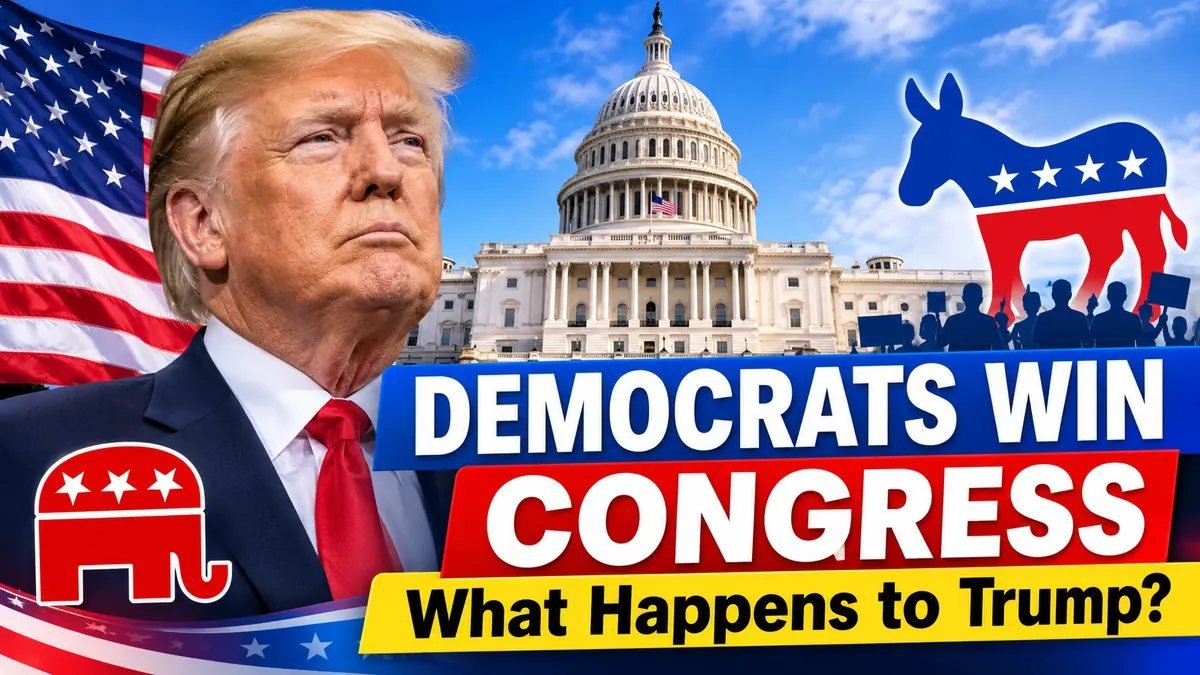
US Midterm Election Results 2026: The 2026 US midterm elections have brought a major shift in American politics. Democrats have gained control of both the House of Representatives and the Senate, creating a new political challenge for President Donald Trump.
But does this mean Trump will lose his presidency? Can Democrats block his decisions, investigate his administration or even remove him from office?
The answer lies in understanding how the American political system works and what power Congress holds.
Here is what the Democratic victory means for Trump, the Republican Party and the future of the United States.
US Midterm Election Results 2026: Who Won?
The Democratic Party has secured control of both chambers of the US Congress in the November 3, 2026 midterm elections.
The result changes the balance of power in Washington, where Republicans previously controlled Congress alongside President Trump.
The new political situation is:
-
President: Donald Trump (Republican Party)
-
House of Representatives: Democratic control
-
US Senate: Democratic control
This means the White House and Congress will now be controlled by opposing political parties.
The outcome is significant because Congress plays a central role in passing federal laws, approving government spending and overseeing the administration.
What Happens to Donald Trump After Democrats Win?
Donald Trump will remain President of the United States despite the Democratic victory.
Midterm elections do not decide the presidency. They determine which political party controls Congress and influence how much support the president receives for his policies.
Trump's current presidential term is scheduled to end in January 2029.
However, with Democrats controlling both chambers, passing new legislation could become more difficult for his administration.
Democrats will also have greater opportunities to question government decisions, investigate federal departments and challenge certain policies.
Can Democrats Remove Trump From the Presidency?
One of the biggest questions following the election is whether Democrats can remove Donald Trump from office.
The US Constitution allows the House of Representatives to impeach a president. However, impeachment does not automatically mean removal.
The process involves two stages:
-
House of Representatives: Members vote on articles of impeachment. A simple majority is required for impeachment.
-
Senate: Senators conduct a trial. Conviction and removal require a two-thirds vote of senators present.
Therefore, even with control of both chambers, Democrats cannot remove Trump simply through a normal majority vote.
They would need sufficient Republican support or support from other senators to reach the constitutional threshold.
US Midterm Election Results 2026: What Powers Will Democrats Have in Congress?
Democratic control of Congress gives the party several important powers.
1. Investigating Trump's administration
Democratic-led congressional committees can investigate government decisions, request documents and hold hearings on issues involving the administration.
2. Blocking or changing legislation
Democrats can influence bills, negotiate changes and oppose Republican proposals.
3. Challenging presidential appointments
The Senate has an important role in confirming Cabinet members, federal judges and other presidential nominees. Democratic control gives senators greater influence over these appointments.
4. Controlling government spending negotiations
Federal funding requires congressional involvement. Democrats can use budget negotiations to challenge or seek changes to the administration's spending priorities.
These powers could make the next two years politically challenging for the White House.
What Is GOP in American Politics?
GOP stands for Grand Old Party, the traditional nickname for the Republican Party in the United States.
The Republican Party is Donald Trump's political party.
It is generally associated with conservative policies, lower taxes, stricter immigration enforcement and a smaller federal role in certain areas of the economy.
The Democratic Party is its main political opponent and generally supports a greater federal role in social programmes, healthcare access and environmental regulation.
Both parties contain politicians with different positions, so these are broad political tendencies rather than rules followed by every member.
What Is Trump's Political Party?
Donald Trump belongs to the Republican Party, also known as the GOP.
He returned to the White House in January 2025 after winning the 2024 presidential election.
The Republican Party has been closely associated with Trump's political movement, commonly known as MAGA, meaning Make America Great Again.
The Democratic Party is the main opposition party.
With Democrats now controlling Congress, the two parties will have to negotiate on major national issues, including immigration, taxes, government spending and foreign policy.
How Will the Democratic Victory Affect Trump's Policies?
Democrats cannot automatically cancel every policy introduced by Trump. However, congressional control could make it more difficult for his administration to introduce new legislation.
Several policy areas could face greater scrutiny:
-
Immigration: Congressional debates over border security, enforcement and immigration funding could intensify.
-
Trade and tariffs: Democrats may challenge aspects of Trump's trade policies through legislation and oversight.
-
Healthcare: Federal healthcare spending and programme funding could become major subjects of negotiation.
-
Taxes: Republican tax proposals may face stronger opposition.
-
Foreign policy: Military spending and the administration's decisions concerning international conflicts could receive more congressional scrutiny.
The actual outcome will depend on negotiations, legislation, presidential decisions and the courts.
What Does the 2026 Election Mean for the 2028 US Presidential Election?
The midterm result could influence the political strategies of both major parties ahead of the next presidential election.
Democrats may use their congressional victories to strengthen their national profile and develop their policy priorities.
Republicans, meanwhile, will face questions about their congressional strategy and how to respond to the election setback.
The next US presidential election is scheduled for November 2028.
However, the midterm results do not automatically determine who will win the next presidential race.
When Will the New Congress Take Office?
The newly elected members of Congress are scheduled to take office on January 3, 2027.
Until then, the outgoing Congress remains in place.
Once the new Congress begins, Democrats will take control of the House and Senate leadership structures, subject to the formal organisation of each chamber.
This will mark the beginning of a new period of political negotiations between the Democratic-controlled Congress and Trump's Republican administration.
US Midterm Elections 2026: Key Questions Answered
Did Democrats win the 2026 midterm elections?
Democrats gained control of both the US House of Representatives and the Senate.
Is Donald Trump still president?
Yes. Trump remains president because midterm elections do not determine who occupies the White House.
What party does Donald Trump belong to?
Donald Trump belongs to the Republican Party, also known as the GOP.
What does GOP stand for?
GOP stands for Grand Old Party, the traditional nickname for the Republican Party.
Can Democrats block Trump's policies?
Democrats can oppose legislation, influence government funding and use congressional oversight powers. However, they cannot automatically reverse every presidential decision.
Can Democrats impeach Donald Trump?
Yes. The House can initiate impeachment proceedings, but removing a president requires a two-thirds Senate conviction vote.
When will the next US presidential election take place?
The next presidential election is scheduled for November 2028.
What Comes Next for American Politics?
The 2026 midterm elections have created a new political balance in Washington. Donald Trump remains in the White House, but Democrats now have control of both chambers of Congress.
This could lead to more congressional investigations, difficult budget negotiations and disagreements over major government policies.
For Americans, the most important question is how this divided political system will affect everyday issues such as the economy, immigration, healthcare and international relations over the next two years.



0 comments
No comments yet. Be the first.