

Dubai Airport Update: Dubai International Airport (DXB) is getting back to normal as airlines restore services following the reopening of UAE airspace. Dubai Airports has also shared new details about the challenges faced during the recent regional conflict, along with plans for airport security, passenger growth and the future shift towards Al Maktoum International Airport.
Here are the key updates travellers need to know.
✈️ UAE Airspace Is Fully Open Again
The UAE General Civil Aviation Authority has confirmed the full resumption of air traffic across the country.
Dubai International Airport is now seeing flight operations recover, although some airlines are still working with temporary schedule changes.
For passengers:
-
UAE airspace has fully reopened.
-
Airlines are gradually restoring normal schedules.
-
Flight capacity has recovered to around 84% of pre-conflict levels.
-
Travellers should check their airline's latest update before heading to DXB.
🌍 Most Airlines Are Bringing Back Dubai Flights
A number of international and regional airlines have already resumed services to Dubai.
Airlines including Qatar Airways, Turkish Airlines and flynas are operating flights, while Air India and Air India Express have restored their full network.
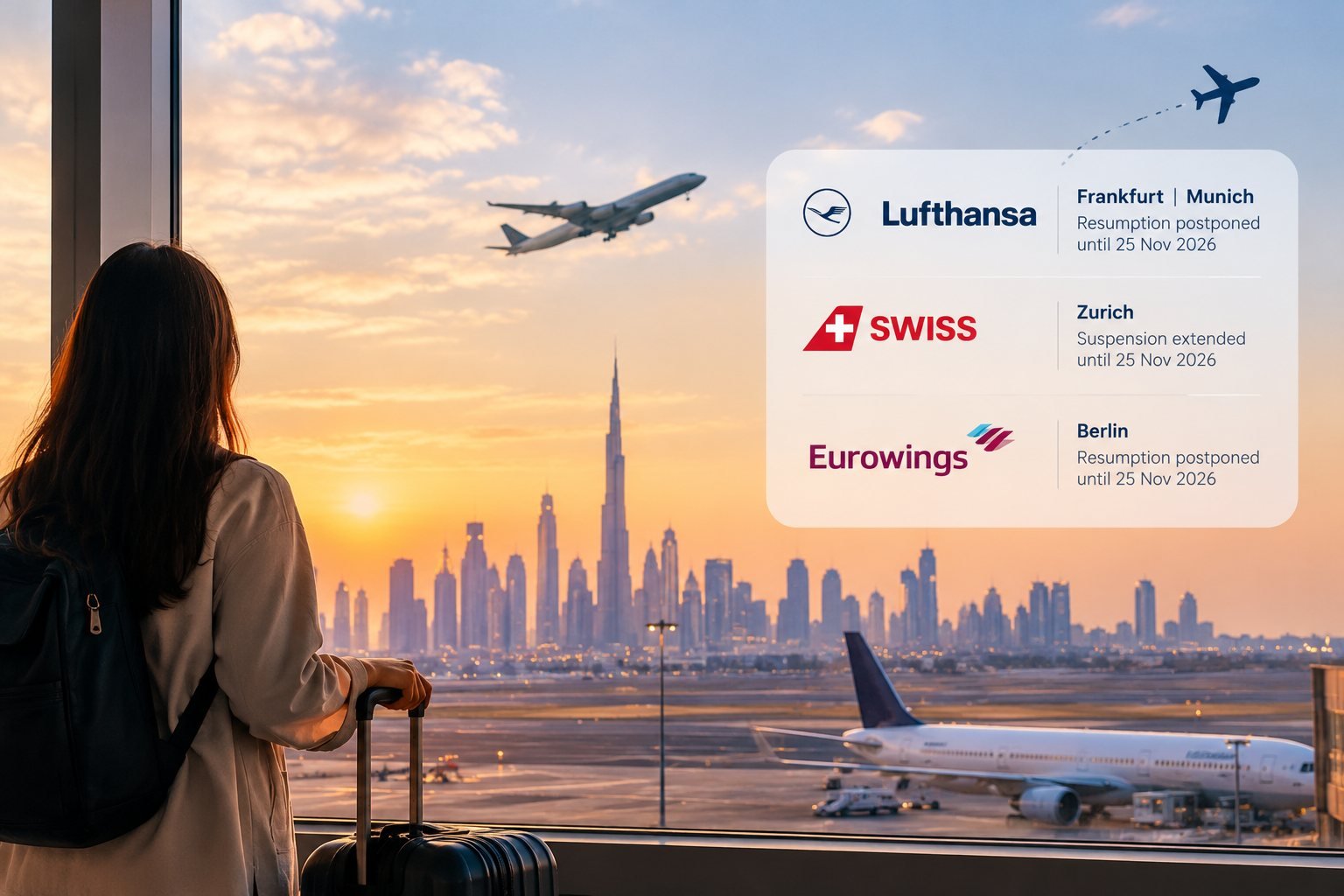
However, some carriers are taking longer to return.
-
Air France: Services remain suspended through September 15.
-
Air Canada: Some services have been paused until January 2027.
-
Virgin Atlantic: Its suspension has been extended further.
This means that the reopening of UAE airspace does not necessarily mean every international route is immediately back to its regular timetable.
🛡️ Dubai Airports Reveals Scale of Security Challenges
Dubai Airports CEO Paul Griffiths has revealed just how challenging the situation became during the height of the regional conflict.
According to Griffiths, Dubai Airports dealt with:
-
111 threat alerts
-
17 missile strikes
-
No fatalities reported
-
Injured people have since recovered
Despite the security threats, the airport managed to keep its operations functioning through the difficult period.
The experience has also pushed Dubai Airports to look at additional ways to protect critical infrastructure in the future.
⛽ Airport Looks at Underground Fuel Storage
Fuel infrastructure has become one of the areas receiving greater attention.
Some strikes during the conflict affected above-ground fuel tanks. As a result, Dubai Airports is considering underground fuel storage facilities as part of its future planning.
The idea is simple: protecting essential fuel infrastructure could help the airport continue operating even during a major emergency.
🔍 Security Checks Could Become Easier
Passengers may also see changes at DXB security checkpoints.
Dubai International Airport is gradually introducing newer screening technology. The upgraded systems are designed to make security checks faster and more convenient.
At compatible security lanes, passengers may eventually be able to leave items such as laptops and liquids inside their bags instead of taking them out separately.
The technology is being introduced gradually rather than across the entire airport at once.
📉 DXB Cuts Its 2026 Passenger Forecast
Dubai Airports has also revised its expectations for passenger numbers this year.
The airport had earlier been working with a forecast of around 100 million passengers for 2026. Following the disruption and temporary airspace closures earlier in the year, that estimate has now been reduced to approximately 70 million passengers.
Even with the lower forecast, DXB is expected to handle a huge number of international travellers.
The recovery in airline capacity is also a positive sign, with capacity now back to around 84% of its pre-conflict level.
🛫 Big Change Coming: From DXB to DWC
Dubai's airport story is not only about the recovery of DXB. The emirate is also preparing for a major long-term change.
Dubai Airports plans to gradually move more aviation activity from Dubai International Airport (DXB) to Al Maktoum International Airport (DWC).
This will not happen overnight.
Instead, the transition is expected to take place over several years as DWC expands its facilities and becomes a larger global aviation hub.
✈️ Flydubai Will Lead the Early Move
Flydubai is expected to be among the first major airlines to shift part of its operation to DWC.
The airline is expected to move around five or six aircraft to Al Maktoum International Airport from early 2027.
The gradual approach will allow Dubai to maintain its existing flight connectivity while the new airport continues to develop.
🧳Dubai Airport Update What Travellers Should Do Now
For people flying through Dubai, the immediate situation is much more stable than during the height of the disruption.
However, travellers should still take a few precautions:
-
Check the flight status directly with the airline before leaving home.
-
Arrive at DXB with enough time for check-in and security.
-
Do not assume that every international route has returned to its old schedule.
-
Check for possible delays or cancellations before travelling.
-
Follow the latest instructions from the airline and airport.
Dubai's Aviation Network Is Entering a New Phase
The latest developments show that Dubai's aviation sector is moving in two directions at the same time.
DXB is focused on recovering normal operations and improving passenger security, while DWC is being prepared for a much larger role in the future.
The revised 2026 passenger forecast reflects the impact of the disruptions earlier this year, but the recovery in flight capacity suggests that demand for Dubai travel remains strong.
For now, DXB continues to serve as the city's main international gateway, while the planned expansion of DWC could eventually reshape how passengers travel through Dubai.



0 comments
No comments yet. Be the first.