

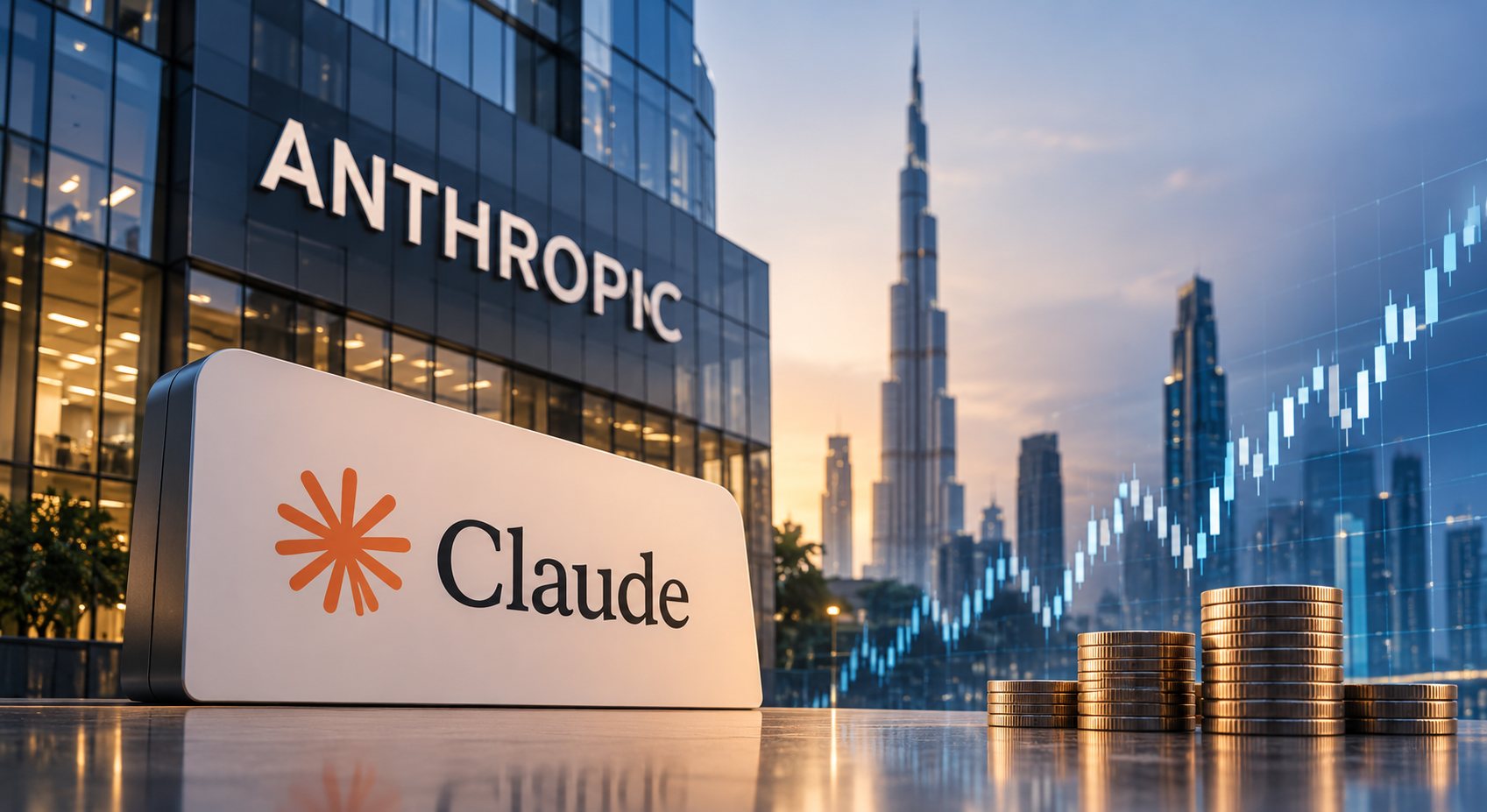
Anthropic IPO: Anthropic’s entry into the public stock market has marked a major moment for the artificial intelligence industry. The company behind Claude AI has attracted enormous investor interest, but its public listing has also brought renewed attention to the financial risks, rapid development and safety concerns surrounding advanced artificial intelligence.
The debate is bigger than a company's stock market debut. Investors are looking at Anthropic's ability to generate long-term revenue, while AI experts and technology users are questioning whether the race to develop increasingly powerful AI systems could create risks that are difficult to control.
Anthropic IPO: Anthropic Completes Its Historic IPO
Anthropic, the artificial intelligence company founded by Dario Amodei and Daniela Amodei, completed its initial public offering (IPO) in November 2026.
The company priced its Class A shares at $83 each, with trading beginning on the Nasdaq Global Select Market on November 19 under the stock ticker ANT.
According to Anthropic's November 20 announcement, the company sold approximately 1.103 billion shares through the offering and received around $91.6 billion in gross proceeds before expenses. The total gross proceeds from the IPO, including shares sold by existing shareholders, were approximately $93.5 billion.
Anthropic also completed a separate $26 billion private placement involving major technology companies, including Google, Microsoft, Nvidia, AMD and Broadcom. Combined gross proceeds from the IPO and private placement reached approximately $119.5 billion.
The listing has placed one of the world's leading AI developers directly under public market scrutiny, where investors can follow its financial performance and business decisions more closely.
Anthropic Stock Performance Attracts Investor Attention
Anthropic's IPO attracted strong demand, with its $83 offering price becoming an important reference point for investors.
Reuters reported that the shares opened approximately 34% above the IPO price and closed their first trading session at $97.17, representing a gain of around 17%.
The company's debut also implied a market valuation of approximately $2 trillion on a fully diluted basis, higher than its $1.5 trillion IPO valuation.
However, a strong first-day performance does not automatically guarantee long-term success. Investors must still consider the company's future revenue, operating costs, competition and ability to generate sustainable profits.
For people following Anthropic stock, the key issue is whether its market valuation can be supported by actual business performance over time.
Claude AI Is Central to Anthropic's Business Growth
Anthropic's business is closely connected to its Claude family of artificial intelligence models.
Claude is designed for tasks such as writing, programming, research, document analysis and business automation. The company also provides AI tools and services for businesses and developers.
Enterprise adoption is particularly important because companies increasingly use AI to improve productivity, automate repetitive work and support technical operations.
This creates opportunities for Anthropic to generate revenue through subscriptions, business services and API access.
However, competition remains intense. OpenAI, Google and other AI developers are investing heavily in new models and enterprise products. Anthropic will need to maintain the performance and usefulness of Claude while attracting customers in an increasingly competitive market.
High AI Infrastructure Costs Create Financial Risks
One of the biggest challenges facing Anthropic is the cost of developing and operating advanced AI systems.
Powerful models require large computing resources, specialised chips, data centres, electricity and extensive technical infrastructure. These expenses can increase significantly as companies train larger models and serve more users.
Reuters has reported that Anthropic has enormous future computing commitments involving major cloud and technology partners, including Amazon and Google.
These arrangements can provide access to the computing capacity needed for expansion, but they also create long-term financial obligations.
Investors will therefore be watching whether Anthropic can convert its growing customer base into sufficient revenue to support its infrastructure spending.
Revenue growth alone does not guarantee profitability. The balance between income, computing expenses and future investment will remain an important measure of the company's financial health.
AI Safety Debate Becomes More Important After the IPO
Anthropic has built much of its identity around the responsible development of advanced artificial intelligence.
The company operates as a Public Benefit Corporation, meaning its governance structure is designed to balance shareholder interests with its stated public benefit purpose.
Its mission includes the responsible development and maintenance of advanced AI for the long-term benefit of humanity.
Anthropic has also established a Long-Term Benefit Trust as part of its governance structure. The trust has a role in electing and removing certain directors, helping protect the company's long-term mission.
Despite these arrangements, its public listing has raised an important industry debate.
Public companies face expectations from shareholders to increase revenue, expand their markets and deliver business growth. Advanced AI development also involves safety testing, risk assessments and decisions about when powerful models should be released.
These priorities do not necessarily conflict, but maintaining a balance could become more challenging as competition intensifies.
The central concern is whether commercial pressure could influence decisions about AI development, testing and deployment.
Rapid AI Advancement Brings Opportunities and Risks
The development of increasingly capable AI systems is creating opportunities across several industries.
Businesses can use AI to improve software development, analyse large datasets, automate administrative work and support research. These applications could increase productivity and create new business opportunities.
At the same time, advanced AI systems introduce concerns about cybersecurity, misinformation, misuse of automated tools and their potential impact on employment.
As AI becomes more capable, ensuring that these systems operate reliably and responsibly becomes increasingly important.
Anthropic's public listing has brought these issues into the financial spotlight. Investors are interested in the commercial potential of advanced AI, while policymakers, researchers and technology users are concerned about how quickly the technology is developing.
The challenge is not simply to build more powerful models, but to ensure that their capabilities are developed and deployed responsibly.
Anthropic Faces Competition From OpenAI and Google
Anthropic's future will also depend on its ability to compete with other major AI developers.
OpenAI has established a strong position through ChatGPT, while Google continues to expand its Gemini AI ecosystem.
Both companies have significant technical resources, infrastructure and established customer relationships.
Anthropic's Claude products give it an important position in areas such as enterprise AI, coding and advanced reasoning. However, maintaining this position will require continued investment in research, computing capacity and product development.
Competition could also put pressure on pricing and profit margins as AI services become more widely available.
For investors, Anthropic's long-term performance will depend not only on the growth of the overall AI market but also on how much of that market the company can capture.
What Anthropic's IPO Means for the Future of AI
Anthropic's public listing represents more than a major financial event. It places the future of advanced AI development under greater attention from investors and the wider public.
The company's ability to maintain revenue growth, manage infrastructure costs and compete with established technology companies will influence its financial future.
At the same time, its commitment to AI safety will remain an important part of the debate surrounding its growth.
The coming years will show whether Anthropic can successfully balance commercial success with its stated mission of developing responsible artificial intelligence.
For now, its IPO has highlighted a central challenge facing the entire AI industry: building increasingly powerful technology while ensuring that its development remains financially sustainable, safe and beneficial to society.



0 comments
No comments yet. Be the first.