


Dubai Property Market: Dubai's real estate market is moving into a more mature phase, with developers increasingly focusing on end users and long-term residents rather than relying mainly on short-term property speculation.
The change reflects a broader shift in the way people are buying homes in Dubai. Instead of purchasing purely to sell at a higher price, more buyers are looking for properties where they can live, raise families and build their lives over several years.
This is encouraging developers to rethink what they build, where they build it and which facilities they include in new communities.
Why Dubai's Property Market Is Changing
Dubai has attracted a large number of international residents, professionals, entrepreneurs and families in recent years.
This population growth has created genuine demand for housing. Buyers are increasingly looking for properties that offer convenient access to schools, healthcare, shopping, parks and workplaces.
As a result, developers are paying more attention to the needs of people who will actually occupy their properties.
The focus is gradually moving from quick investment returns to long-term community value.
Dubai Property Market: Strong Demand From Residents
The continued arrival of expatriate families and professionals remains an important factor supporting Dubai's property sector.
Many residents are no longer viewing Dubai simply as a temporary destination. They are increasingly choosing to establish longer-term lives in the emirate.
That creates steady demand for homes in well-planned communities.
For developers, this type of demand can be more dependable than relying entirely on investors who buy properties with the intention of reselling them quickly.
Housing Is No Longer the Only Priority
Today's homebuyers are looking beyond the property itself.
For families, the surrounding community can be just as important as the size or design of a villa or apartment.
Key requirements include:
-
Schools and nurseries
-
Hospitals and clinics
-
Parks and open spaces
-
Supermarkets
-
Restaurants and cafes
-
Retail centres
-
Fitness facilities
-
Good road connections
-
Public transport
This is why master-planned communities are becoming increasingly important in Dubai.
Developers Are Paying More Attention to Villas and Townhouses
Dubai remains well known for its luxury apartments and high-rise developments, but the growing focus on end users is increasing interest in villas and townhouses.
Families often prefer larger homes with additional living space, outdoor areas and access to community facilities.
These properties can also be more suitable for residents who expect to stay in Dubai for a longer period.
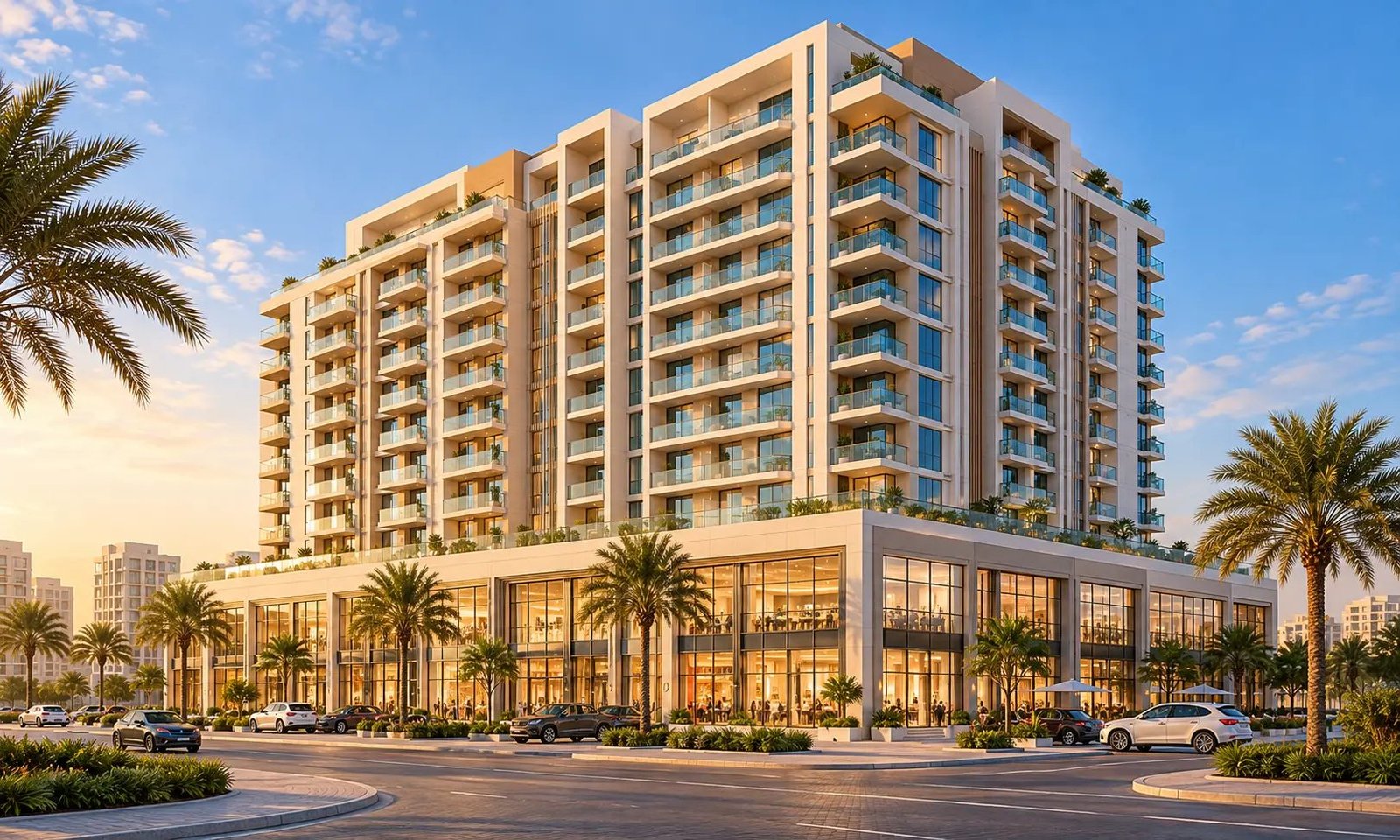
Developers are therefore increasingly creating residential projects where homes are supported by schools, parks, retail outlets and other everyday facilities.
From Investment-Led Projects to Lifestyle Communities
The priorities of developers are changing.
Earlier, a project could attract significant attention simply because of its location, luxury features or potential for capital appreciation.
Today, buyers are becoming more selective.
They want to know whether the community will actually be convenient to live in.
That means factors such as location, infrastructure, accessibility and everyday amenities are becoming increasingly important.
The Importance of Economic Resilience
Dubai's rising living costs have not eliminated demand for residential property.
The city continues to attract professionals and families because of employment opportunities, business activity and its international lifestyle.
This creates a relatively broad base of potential residents for new communities.
Developers can respond to this demand by offering different property sizes and price points rather than concentrating only on ultra-luxury homes.
A More Balanced Property Market
A market dominated by speculative buying can experience sharp price movements when investor sentiment changes.
End users generally have different priorities.
Someone buying a home to live in is less likely to make a decision based solely on short-term price movements. They are more concerned about the property's suitability, location and long-term value.
A larger end-user base could therefore contribute to a more balanced and stable real estate market.
It does not remove market cycles, but it can reduce the sector's dependence on rapid speculative activity.
How the Developer Strategy Is Changing
Developers are increasingly considering the complete living experience when planning new projects.
The focus is moving towards:
-
Family villas
-
Townhouses
-
Practical apartment layouts
-
Master-planned communities
-
Schools
-
Healthcare facilities
-
Parks
-
Retail centres
-
Community spaces
The aim is to create neighbourhoods where residents can access most essential services without travelling far from home.
Why Master-Planned Communities Matter
Master-planned communities offer developers the opportunity to build more than individual residential properties.
They can create entire neighbourhoods with housing, shopping, education, healthcare and recreational facilities.
For residents, this can make everyday life easier.
Parents may prefer communities close to schools. Professionals may value quick road connections. Families may look for parks and recreational areas.
These considerations can influence property decisions just as strongly as the design of the home itself.
Payment Plans Are Also Evolving
Payment plans have played a major role in Dubai's off-plan property market.
As the market becomes more focused on genuine buyers, financing structures may also become more practical for people planning to occupy their homes.
Instead of relying only on aggressive short-term incentives, developers can offer structured payment arrangements that make it easier for buyers to plan their finances.
This can also encourage more financially stable purchasing behaviour.
What This Means for Homebuyers
For people planning to buy a home in Dubai, the changing market offers an opportunity to look beyond the property's headline price.
Before buying, prospective homeowners should consider:
Location: How convenient is the property for work and daily travel?
Education: Are schools and nurseries available nearby?
Healthcare: How easily can residents reach hospitals and clinics?
Amenities: Are supermarkets, restaurants and shops accessible?
Community: Is the development designed for families and long-term residents?
Transport: Are major roads and public transport options nearby?
Service charges: What will the ongoing costs be?
These factors can have a significant impact on the long-term usefulness of a property.
Investors Are Still Important
The shift towards end users does not mean Dubai's property market is becoming unattractive to investors.
Investors continue to play an important role in the sector.
However, investors may increasingly need to focus on properties supported by genuine rental demand rather than relying entirely on future price increases.
A development with good transport links, strong amenities and a growing resident population can potentially attract both tenants and buyers.
This creates a situation where the interests of investors and end users can overlap.
Why Community Quality Could Become a Bigger Selling Point
As more residential projects enter the market, developers may face stronger competition.
Simply offering a new building may no longer be enough.
Buyers can compare communities based on the quality of infrastructure, available facilities, location and overall lifestyle.
Projects that offer convenient access to schools, healthcare, parks and retail may have an advantage among families and long-term residents.
This could encourage developers to invest more in the wider community rather than concentrating solely on individual properties.
Dubai's Real Estate Market Is Maturing
The growing focus on end users is an important sign of change in Dubai's property sector.
A mature real estate market needs more than investors buying and selling properties. It also needs people who live in those homes, work in the city and contribute to the wider economy.
Dubai's population growth is helping create this foundation.
As more residents choose to stay for longer periods, developers have a stronger reason to build properties around genuine lifestyle requirements.
What Could Happen Next?
The next stage of Dubai's property market could see greater competition based on quality of living rather than luxury alone.
Developers may increasingly compete on factors such as:
-
Community planning
-
Green spaces
-
Education
-
Healthcare
-
Retail access
-
Connectivity
-
Home layouts
-
Family-friendly facilities
This could benefit buyers because developers will have stronger incentives to create practical and well-connected communities.
Dubai's real estate market is gradually moving towards a model where long-term residents and end users play a bigger role.
Strong population growth and continued demand from expatriate families and professionals are encouraging developers to rethink their strategies.
The focus is shifting towards villas, townhouses, practical homes and master-planned communities supported by schools, healthcare, parks and retail.
Investors will continue to be an important part of Dubai's property market, but genuine residential demand is becoming increasingly significant.
The result could be a more balanced market where long-term living, community quality and sustainable demand become just as important as short-term price growth.
0 comments
No comments yet. Be the first.