

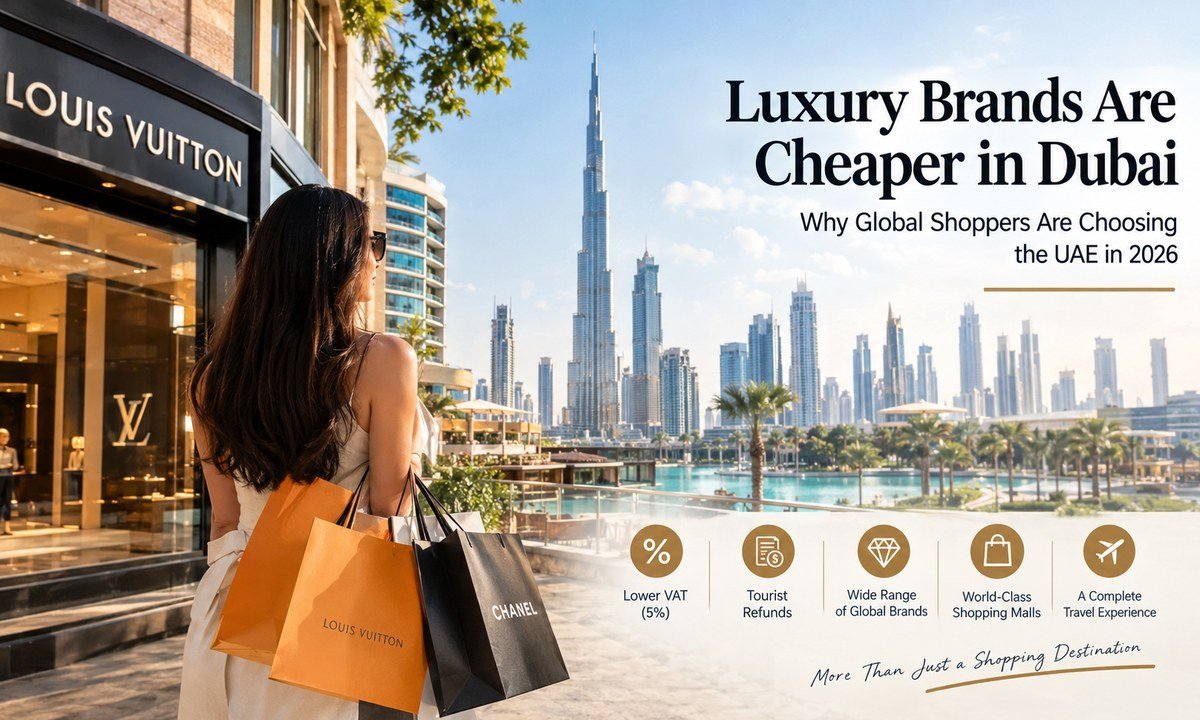
Luxury Brands Are Cheaper in Dubai in 2026: Why Global Shoppers Are Looking to the UAE
Dubai has long been associated with luxury shopping, but in 2026 the attraction is about more than impressive malls and flagship boutiques. For international shoppers, the combination of a relatively low VAT rate, tourist tax refunds, a strong retail ecosystem and access to global luxury brands can make Dubai an attractive place to compare prices before making a major purchase.
That does not mean every designer handbag, watch, jewellery piece or fashion item is automatically cheaper in Dubai. Luxury pricing varies by brand, product, collection, exchange rates and country. However, Dubai can offer a meaningful price advantage in certain categories, particularly when eligible visitors take advantage of the UAE's tourist VAT refund system.
Why Dubai Can Offer Better Luxury Prices
One of the biggest factors behind Dubai's appeal is taxation.
The UAE applies a standard 5% VAT, considerably lower than the standard VAT rates found in many European markets. Eligible international tourists can request a VAT refund on qualifying purchases when leaving the UAE, subject to the applicable rules and validation requirements. The UAE government's official guidance confirms that tax-free shopping is available to eligible tourists on goods that are purchased in the country and subsequently exported.
For an expensive luxury purchase, even a relatively small tax difference can become noticeable.
Consider a designer product priced at AED 20,000. The VAT component alone represents a meaningful amount of money, although the final saving from a tourist refund will be lower than the full VAT amount because the refund process is subject to applicable administrative charges and conditions.
This is one reason experienced shoppers tend to look at the final effective price, rather than simply comparing the advertised ticket price.
Tax Refunds Add to Dubai's Shopping Appeal
Dubai's tax-refund system is particularly relevant to international visitors.
Tourists shopping at participating retailers can have their eligible purchases processed through the UAE's tourist VAT refund system. The purchase and goods must meet the scheme's requirements, and the transaction must be validated when the traveller exits the UAE.
The process has become an important part of the overall shopping proposition. Rather than luxury shopping being treated simply as a retail activity, Dubai has developed an environment in which international visitors can combine tourism, hospitality, dining and high-value shopping during the same trip.
For visitors already travelling to the UAE, that can make the economics of purchasing a luxury item more interesting.
Luxury Watches and Jewellery Attract International Buyers
Watches and jewellery are among the categories for which shoppers frequently compare prices across countries.
Dubai's established luxury retail infrastructure gives consumers access to a broad selection of international brands, specialist retailers and authorised boutiques. The city's reputation as a regional centre for high-end watches and jewellery has also been strengthened by its large international visitor base.
Availability can be just as important as price.
A particular model may be difficult to find in one market but available in another. Limited editions, new collections and different allocations can therefore influence where a shopper ultimately decides to buy.
For high-value purchases, consumers are increasingly comparing price, availability, authenticity, warranty and after-sales service together, rather than looking only for the lowest sticker price.
Designer Fashion and Handbags: Compare Before You Buy
Fashion is another major part of Dubai's luxury retail market.
International brands operate flagship stores across Dubai's major shopping destinations, giving visitors access to handbags, footwear, ready-to-wear collections, accessories and seasonal releases.
However, shoppers should be careful with the broad statement that luxury fashion is "always cheaper in Dubai."
European markets can sometimes offer competitive or lower prices for European luxury brands, particularly when local tax-refund schemes are taken into account. In other cases, Dubai may compare favourably depending on the brand, product and exchange rate.
The practical lesson for 2026 is simple: compare the final price for the exact same model in the same currency before purchasing.
That approach is more reliable than relying on general claims about an entire country being cheaper.
Dubai's Luxury Retail Environment Is Part of the Attraction
Price is only one reason people shop for luxury goods in Dubai.
The city has built a retail environment designed around the expectations of international consumers. Luxury shopping is closely connected with hotels, restaurants, entertainment, airports and tourism attractions.
This creates a different shopping experience from simply ordering an item online.
A visitor can spend an afternoon comparing products at luxury boutiques, enjoy a meal, visit an attraction and complete the purchase during the same trip. For affluent international travellers, convenience and experience can be part of the perceived value.
Dubai's scale as an international tourism destination reinforces this model. The emirate welcomed 19.59 million international overnight visitors in 2025, a 5% increase from the previous year, according to Dubai's Department of Economy and Tourism.
Dubai's Location Gives It Another Advantage
The UAE's position between Europe, Asia, Africa and the Middle East has helped Dubai develop into a major international shopping and travel hub.
For travellers from countries where luxury products carry substantial taxes, import duties or retail mark-ups, Dubai can be particularly interesting as a comparison market.
This is especially relevant for visitors who are already travelling through Dubai rather than making a separate trip exclusively for shopping.
Dubai International Airport's enormous international passenger network also contributes to the city's role as a global shopping destination.
What Should Shoppers Check in 2026?
Anyone considering a high-value luxury purchase in Dubai should look beyond the headline price.
The most useful comparison includes:
- The exact model or reference number
- Dubai's advertised retail price
- The applicable VAT
- Eligibility for the tourist VAT refund
- Any refund administration charges
- Current currency exchange rates
- The equivalent price in the shopper's home market
- Warranty and after-sales arrangements
- Product availability
- Any customs or import obligations when returning home
The last point is particularly important. A saving at the point of purchase does not necessarily remain a saving after a traveller returns to their home country. Local customs, declaration requirements and taxes can affect the final cost.
Is Dubai Really Cheaper for Luxury Brands?
The answer depends on what is being purchased and what market it is being compared with.
Dubai's 5% VAT and tourist refund system can improve the final price for eligible international shoppers, while the city's competitive luxury retail environment and extensive brand selection add further advantages.
But Dubai should not be presented as a universal low-price destination for luxury goods. Some European luxury products may be priced more competitively in their home markets, while particular products or brands may offer better value in Dubai.
What makes Dubai compelling in 2026 is the combination of price, availability, choice, convenience and shopping experience.
For international visitors who are already planning a trip to the UAE, checking Dubai's luxury prices alongside those in their home country can therefore be worthwhile. On selected purchases, the difference after VAT considerations can be significant enough to influence the buying decision.
The Bigger Picture
Dubai's luxury retail market reflects the broader evolution of the city's economy.
The emirate is no longer simply a destination where visitors buy luxury goods. It has developed a sophisticated consumer ecosystem around international tourism, premium retail, hospitality, finance and global business.
As international travel continues to support Dubai's retail sector, luxury shopping is likely to remain an important part of the city's appeal in 2026 and beyond.
For shoppers, the smartest approach is not to assume that everything is cheaper. Instead, Dubai offers something arguably more useful: a highly competitive luxury marketplace where international consumers can compare prices, access a wide selection of brands and potentially reduce the effective cost of eligible purchases through the UAE's tourist VAT refund system.
In a market where a single purchase can run into thousands or even tens of thousands of dirhams, doing that comparison can make a real difference.


0 comments
No comments yet. Be the first.