
Top Booming Sectors in Dubai in 2026: Where the Emirate’s Next Wave of Growth Is Taking Shape
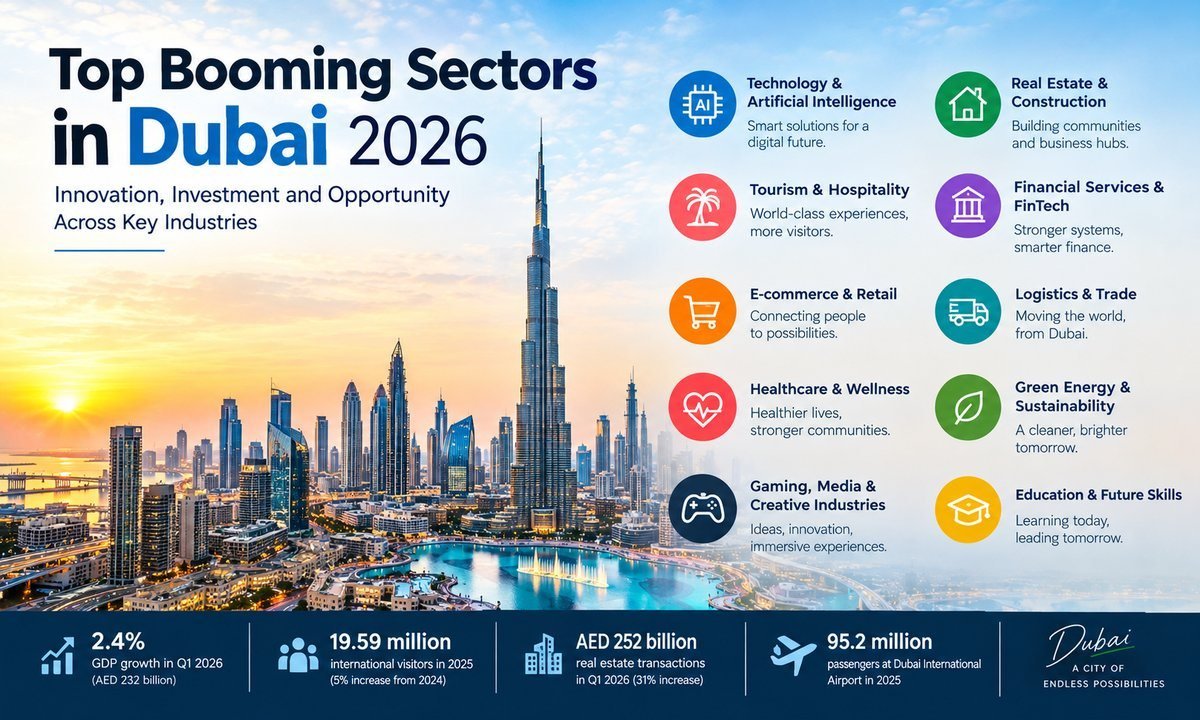
Dubai has entered 2026 with an economy that looks increasingly diversified, investment-driven and focused on future industries. While real estate, tourism and trade remain important pillars, the latest economic figures point to a broader story: financial services, construction, healthcare, technology, logistics and other knowledge-based activities are all contributing to the emirate’s expansion.
Dubai’s economy recorded 2.4% year-on-year growth in the first quarter of 2026, reaching approximately AED 232 billion in GDP. The figures underline the resilience of an economy that has spent years building strength across multiple sectors rather than depending on a single source of growth.
For businesses and investors watching the UAE market, the question is therefore no longer simply whether Dubai is growing. It is which sectors are likely to shape the next phase of that growth.
Real Estate and Construction Remain at the Centre
Few industries are as closely associated with Dubai's economic story as real estate. In 2026, however, the sector's significance extends beyond luxury residential developments and iconic skyscrapers.
Dubai recorded AED 252 billion in real estate transactions during Q1 2026, representing a 31% increase in transaction value compared with the same period of 2025. Foreign investment in the sector also reached AED 148.35 billion during the quarter.
Construction is moving in the same direction. Official Q1 figures show construction activity grew 8.2% year-on-year, with the sector generating approximately AED 18.7 billion in gross value added. Real estate activities themselves grew 3.1% during the period.
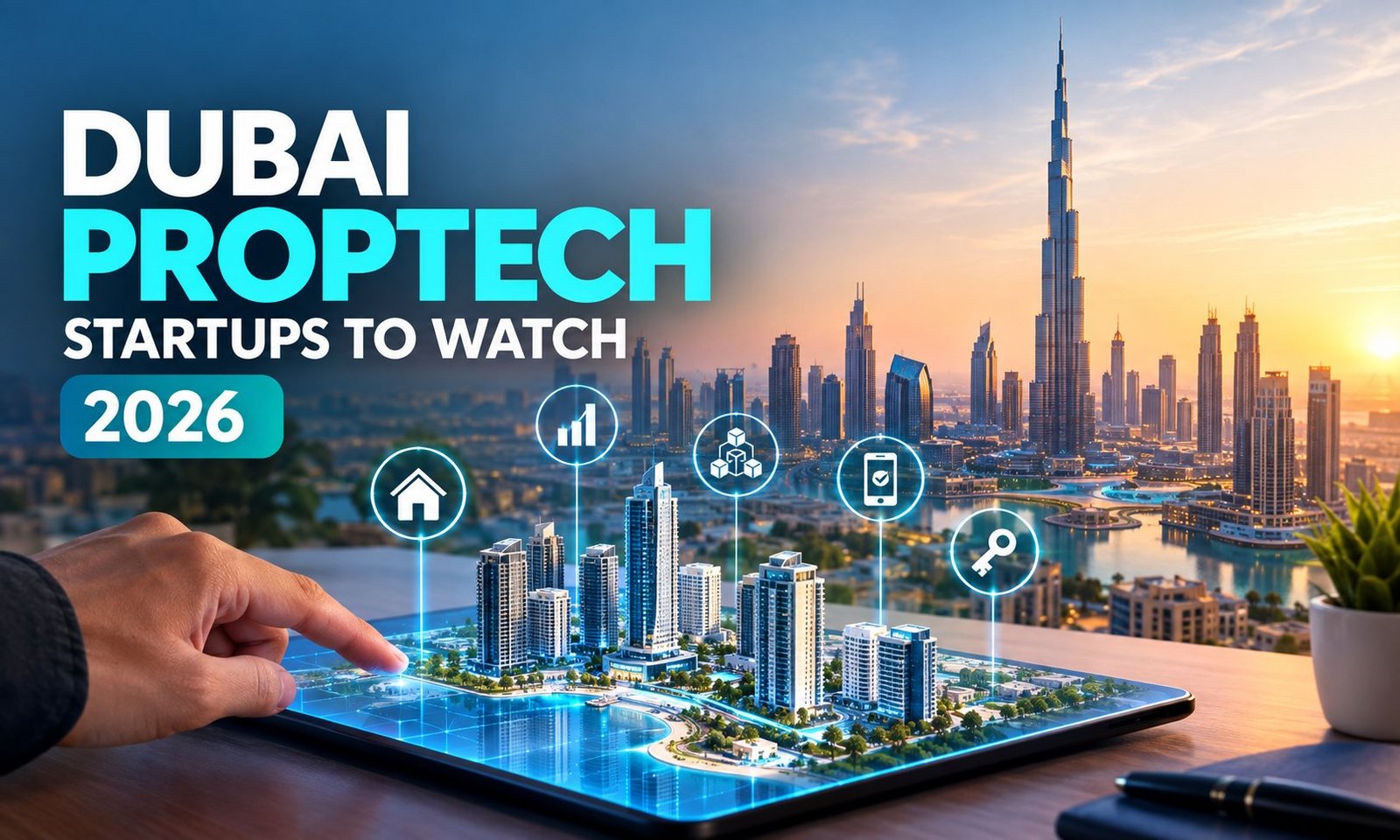
The opportunity is increasingly spreading into areas such as property technology, building management, sustainable construction, infrastructure services and specialized real estate services.
Financial Services and FinTech Gain Further Momentum
Dubai's financial sector is another major engine of growth. In Q1 2026, financial and insurance activities expanded by 6.5%, reaching approximately AED 32.4 billion in gross value added and accounting for around 14% of Dubai's GDP.
The city's position between major markets in Asia, Europe and Africa has helped it develop into an important regional centre for banking, investment, wealth management and insurance.
At the same time, financial technology is changing the nature of the sector. Digital payments, financial platforms, blockchain applications and technology-enabled financial services are creating opportunities for companies that combine finance with software and data.
For entrepreneurs, this makes Dubai's financial ecosystem relevant not only to traditional financial institutions but also to technology companies building services around them.
Artificial Intelligence and the Digital Economy
Perhaps the most significant change in Dubai's economic landscape is the growing importance of technology.
Dubai has continued to position artificial intelligence, digital transformation and innovation as strategic priorities. The emirate's 2026–2028 government budget specifically identifies artificial intelligence, digital transformation, entrepreneurship and future-focused sectors as areas supporting its long-term economic ambitions.
Dubai also retained the global No. 1 position for AI-related greenfield FDI projects for the fourth consecutive year, according to data from the Financial Times' fDi Markets database. In 2025, the emirate attracted 1,253 announced greenfield FDI projects, a 10.5% increase from the previous year.
This creates a wide field for businesses working in AI software, cloud infrastructure, cybersecurity, automation, data services and enterprise technology.
The opportunity is particularly interesting because technology is increasingly being applied across other industries rather than operating as a standalone sector.
Tourism Continues to Expand Beyond Traditional Hospitality
Tourism remains one of Dubai's strongest international-facing industries.
The emirate welcomed 19.59 million international overnight visitors in 2025, marking a 5% increase from 2024 and its third consecutive record-breaking year.
The scale of this visitor economy supports far more than hotels. Restaurants, entertainment, retail, events, transport, travel technology, wellness and luxury experiences all benefit from the continuing flow of international visitors.
Dubai's tourism market is also becoming more diversified. Business travel, major events, family tourism, luxury experiences and destination-based entertainment are increasingly interconnected, creating opportunities for companies that can deliver specialised experiences rather than conventional tourism products.
Logistics, Transportation and Trade
Dubai's geographic position gives logistics a structural advantage.
The emirate sits at the intersection of major trade routes connecting Asia, Europe, Africa and the Middle East. Its airports, seaports, free zones and road networks have helped establish it as a major distribution and re-export centre.
Dubai International Airport handled 95.2 million passengers in 2025, while Jebel Ali Port handled approximately 15.5 million TEUs in 2024, according to Dubai government data.
The growth opportunity now extends into technology-driven logistics. Warehousing automation, fulfilment, supply-chain software, last-mile delivery and cross-border e-commerce are becoming increasingly important as businesses seek faster and more efficient ways to move products.
Healthcare and Wellness Emerging as a High-Growth Area
Healthcare deserves particular attention in 2026.
Human health and social work activities recorded the highest sector growth rate in Dubai during Q1 2026, expanding 17.5% year-on-year. The sector's gross value added reached approximately AED 3.6 billion.
Dubai's international population and its position as a regional business and tourism hub create demand for high-quality medical services, specialist care, wellness, health technology and related professional services.
The combination of healthcare and technology could become especially important as digital health platforms, data-driven services and specialised medical facilities develop further.
Retail, E-commerce and Consumer Businesses
Retail remains one of Dubai's economic heavyweights.
Wholesale and retail trade was the largest contributor to Dubai's GDP in Q1 2026, accounting for approximately 22% of the economy. The sector recorded 2.6% year-on-year growth and generated around AED 50.9 billion in real gross value added.
Dubai's role as a global shopping destination has traditionally been built around malls, luxury brands and major retail events. Increasingly, however, the market is being shaped by e-commerce, social commerce, quick delivery and digitally connected consumer experiences.
This creates room for businesses that combine physical retail with digital platforms, specialised online services and data-driven customer engagement.
Manufacturing and Advanced Industry
Manufacturing is another area receiving increasing attention as Dubai works to diversify its economic base.
Dubai's 2025 data placed manufacturing at approximately AED 47.4 billion in real GDP, with industrial areas such as Dubai Industrial City and Jebel Ali Free Zone supporting the sector.
More importantly, Dubai ranked No. 1 globally for greenfield manufacturing FDI projects in 2025, according to the Dubai government citing fDi Markets data. It also ranked highly across industrial equipment, consumer goods and other strategic clusters.
The direction suggests that manufacturing in Dubai is increasingly connected to advanced production, international supply chains and export-oriented businesses rather than traditional domestic manufacturing alone.
Sustainability and Clean Infrastructure
Sustainability is becoming an increasingly visible part of Dubai's growth strategy.
The emirate's 2026 government budget allocates substantial funding to infrastructure, including renewable energy facilities, waste management, public transport and related infrastructure. Infrastructure investments account for 48% of projected government expenditure in the 2026 budget.
This creates opportunities in renewable energy, energy efficiency, sustainable buildings, waste management, water technology, electric mobility and environmental services.
For businesses entering Dubai, sustainability is therefore increasingly relevant not simply as an environmental consideration but as part of the city's infrastructure and investment agenda.
What Makes Dubai's 2026 Growth Different?
The most notable feature of Dubai's current economic cycle is diversification.
Real estate continues to perform strongly. Tourism is reaching new records. Financial services are expanding. Healthcare has recorded particularly rapid growth, while technology and AI are receiving increasing investment and policy attention.
Dubai's investment environment is also attracting companies across a wide range of industries. The three economic zones operated under the Dubai Integrated Economic Zones Authority recorded 96% occupancy during the first half of 2026, reflecting continued demand from businesses and investors.
That breadth matters.
Instead of relying on one or two headline industries, Dubai is building an interconnected ecosystem in which property supports business expansion, tourism supports retail and hospitality, logistics supports international trade, and technology increasingly connects all of them.
Looking Ahead
The outlook for Dubai in 2026 is therefore broader than the traditional image of construction cranes, luxury hotels and financial centres.
The next stage of growth is likely to be defined by the combination of technology and traditional industries: AI in finance, PropTech in real estate, automation in logistics, digital health in healthcare, e-commerce in retail and clean technology across infrastructure.
Dubai's Q1 economic performance, record tourism numbers, strong property activity and continued foreign investment suggest that the emirate remains firmly positioned as an international centre for business and investment. Its challenge now is not simply maintaining growth, but converting that momentum into sustainable, innovation-led expansion.
For companies considering the region, 2026 presents a market where established sectors continue to offer scale while emerging industries are creating new opportunities. That combination may ultimately prove to be one of Dubai's biggest competitive advantages.
Sources
This article is based primarily on official Dubai government economic, investment and sector data, including the Dubai Department of Finance/Public Debt Management Office, Dubai government investment information and official tourism figures.
0 comments
No comments yet. Be the first.