
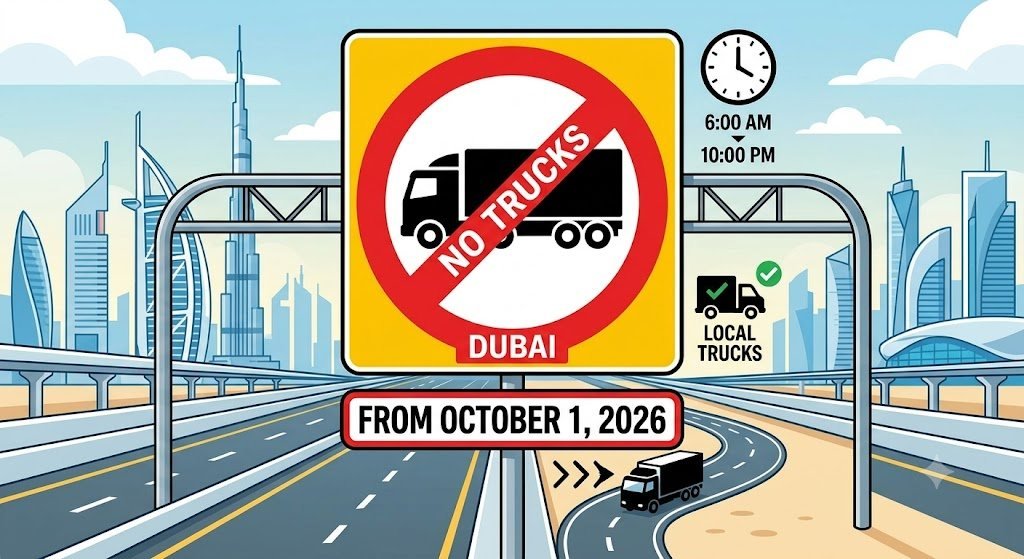
Dubai Truck Restrictions From October 1, 2026: Truck drivers in Dubai will need to change how they plan some journeys from October 1, 2026, when truck movement restrictions take effect across roads in the emirate.
The Roads and Transport Authority (RTA) and Dubai Police are introducing the restrictions as part of measures to improve traffic flow, reduce congestion and strengthen road safety.
However, this is not a blanket 24-hour truck ban across Dubai. The restriction depends on the road, area and time. Emirates Road is exempt from the new October 1 decision.
When Do Dubai Truck Restrictions Start?
The new restrictions start on October 1, 2026.
RTA is asking truck drivers, truck owners and transport and freight companies to check their routes before travelling and follow the applicable restriction timings.
Drivers are also advised to use permitted alternative routes or move to designated truck rest areas when they cannot continue during a restricted period.
Dubai Truck Restrictions From October 1, 2026: Which Roads Have Truck Restrictions in Dubai?
The restrictions are different from one road to another.
Roads With 24-Hour Truck Restrictions
RTA lists the following locations among those subject to round-the-clock truck movement restrictions:
-
Al Qudra Street
-
Al Meydan Street
-
All crossings
-
Airport Tunnel
Drivers should therefore not treat these locations as routes where they can simply wait for the restriction period to end later in the day.
Roads Restricted From 6am to 10pm
Truck movement is restricted for 16 hours a day, from 6:00am to 10:00pm, on:
-
Sheikh Zayed Road
-
Beirut Street
-
Al Mizhar
-
Muhaisnah
-
Oud Al Muteena
Drivers using these roads need to plan their journeys around the restriction or use an approved alternative route.
Roads With Three Daily Restricted Periods
Some urban roads have truck restrictions during three peak periods:
-
6:30am to 8:30am
-
1:00pm to 3:00pm
-
5:30pm to 8:00pm
The roads identified by RTA include:
-
Airport Street
-
Oman Street
-
Damascus Street
This means trucks can still use these roads outside the listed restriction periods, subject to other applicable traffic rules.
Is Emirates Road Open for Trucks?
This is one of the most important points for truck drivers.
Emirates Road is exempt from the October 1, 2026 decision.
However, drivers should still follow current signs and any separate restrictions that may apply to a particular section or direction of the road. The October 1 announcement should not be interpreted as a guarantee that every truck movement on Emirates Road is unrestricted under every existing rule.
What Should Truck Drivers Do?
For drivers, the main change is the need for better route and time planning.
RTA has advised truck drivers to:
-
Check the restriction applicable to their route before starting a journey.
-
Follow the permitted restriction timings.
-
Use approved alternative routes.
-
Follow road signs and traffic directions.
-
Use designated truck rest areas during restricted periods.
-
Avoid random parking on major roads.
-
Avoid parking in residential areas.
-
Avoid stopping in unauthorised parking spaces.
This is particularly important for drivers making several deliveries in different parts of Dubai during the same shift.
What Happens If a Driver Reaches a Restricted Road?
A driver should not simply park on the roadside when a restriction becomes active.
RTA is encouraging truck operators to use designated truck rest stops during restriction periods. These facilities provide organised places for trucks to wait instead of creating additional congestion or safety risks on public roads.
The authority has completed 14 of 16 planned truck rest stops across six key locations, strategic roads and logistics areas in Dubai.
Seven rest stops have also been expanded by 364 parking spaces, increasing their combined capacity to 1,007 truck parking spaces.
What Facilities Are Available at Truck Rest Stops?
The rest facilities are designed to support drivers during waiting and rest periods.
According to RTA, facilities include:
-
Rest and accommodation facilities
-
Prayer rooms
-
Restaurants
-
Retail outlets
-
Fuel stations
More than 150,000 trucks use the rest stops each month, while Dubai records approximately 400,000 truck journeys every day.
RTA also plans to provide four additional permanent truck rest areas in partnership with the private sector.
Can Trucks Get Permission to Travel During Restricted Hours?
There is a permit option for essential cases.
Companies whose operations require truck movement during restricted hours can apply through RTA for the Mobility Permit for Heavy Vehicles in Banned Times and Roads, through the Right-of-Way (ROW) Department.
The permit is intended for necessary operations, so companies should check the requirements before planning a journey during a restricted period.
What Does the Change Mean for Truck Owners?
The new restrictions will also require transport and freight companies to review their daily operations.
Truck owners and fleet operators may need to reconsider:
-
Delivery timings
-
Driver schedules
-
Routes
-
Waiting locations
-
Rest-stop arrangements
-
Permit requirements for essential journeys
RTA and Dubai Police are conducting an awareness campaign to inform heavy-vehicle drivers, truck owners and transport and freight companies about the restriction areas, timings and alternative routes.
Why Is Dubai Restricting Truck Movement?
The authorities say the restrictions are intended to improve traffic management across Dubai.
The objectives include:
-
Reducing congestion on major roads
-
Improving traffic flow
-
Increasing road capacity on affected routes
-
Reducing journey times
-
Improving road safety
-
Supporting the movement of goods across the emirate
The authorities are therefore balancing two needs: keeping commercial goods moving while reducing the impact of heavy vehicles during congested periods.
Dubai Truck Restriction Timings at a Glance
| Road or area | Truck restriction |
|---|---|
| Al Qudra Street | 24 hours |
| Al Meydan Street | 24 hours |
| All crossings | 24 hours |
| Airport Tunnel | 24 hours |
| Sheikh Zayed Road | 6am–10pm |
| Beirut Street | 6am–10pm |
| Al Mizhar | 6am–10pm |
| Muhaisnah | 6am–10pm |
| Oud Al Muteena | 6am–10pm |
| Airport Street | 6:30–8:30am, 1–3pm, 5:30–8pm |
| Oman Street | 6:30–8:30am, 1–3pm, 5:30–8pm |
| Damascus Street | 6:30–8:30am, 1–3pm, 5:30–8pm |
| Emirates Road | Exempt from the new October 1 decision |
What Truck Drivers Should Remember
From October 1, the most important thing for truck drivers is to check the route and restriction time before starting the trip.
A road that is available to trucks at one time may be restricted during another period. Drivers should therefore avoid assuming that the same route will remain available throughout the day.
When a restriction applies, drivers should use a permitted alternative route or a designated truck rest area. Companies with essential operations that require movement during restricted periods should check RTA's permit process.
The new rules are designed to manage truck movement without stopping the flow of goods across Dubai, while making major roads safer and less congested during busy periods.



0 comments
No comments yet. Be the first.